

If you have ever compared probiotic labels, you have probably seen the CFU count. 10 billion. 50 billion. 100 billion. The numbers look impressive, but do they really tell you which product works better?
When shoppers search for the best probiotics in Singapore, many assume the highest CFU count must be the strongest choice. In reality, CFU is only one part of the story. A probiotic still needs to survive the journey from the capsule to your gut before it can support your digestive health.
This guide walks you through the five things that matter more than a big number on the label, so you can choose a probiotic supplement with more confidence.
Why CFU Count Alone Doesn't Tell the Full Story
CFU stands for colony-forming units. It tells you the number of live bacteria in a product, usually at the time of manufacturing.
That sounds useful, but there is one problem: it does not always tell you how many bacteria survive until they reach your gut.
Your digestive system is a harsh environment. Stomach acid and bile can affect how many probiotic bacteria stay alive before they reach the intestine, where they are meant to work. Without the right delivery system or protective coating, a high-CFU probiotic may lose much of its value before your body can use it.
This means a product with 10 billion CFU and strong acid resistance may perform better than one with 100 billion CFU but poor survival.
So, instead of asking only, “How many bacteria are inside?”, ask a better question:
How many can survive, reach the gut, and work effectively?
That is where formulation quality matters.
5 Things to Look for in a Quality Probiotic Supplement in Singapore
1. Strain Diversity
Different probiotic strains do different things. Some strains may support bowel regularity, while others may support immune function, digestive comfort, or microbiome balance.
That is why strain diversity matters.
A single-strain product may offer a narrower benefit because it focuses on one type of bacteria. A multi-strain formula gives broader support by combining different strains that can work in different ways.
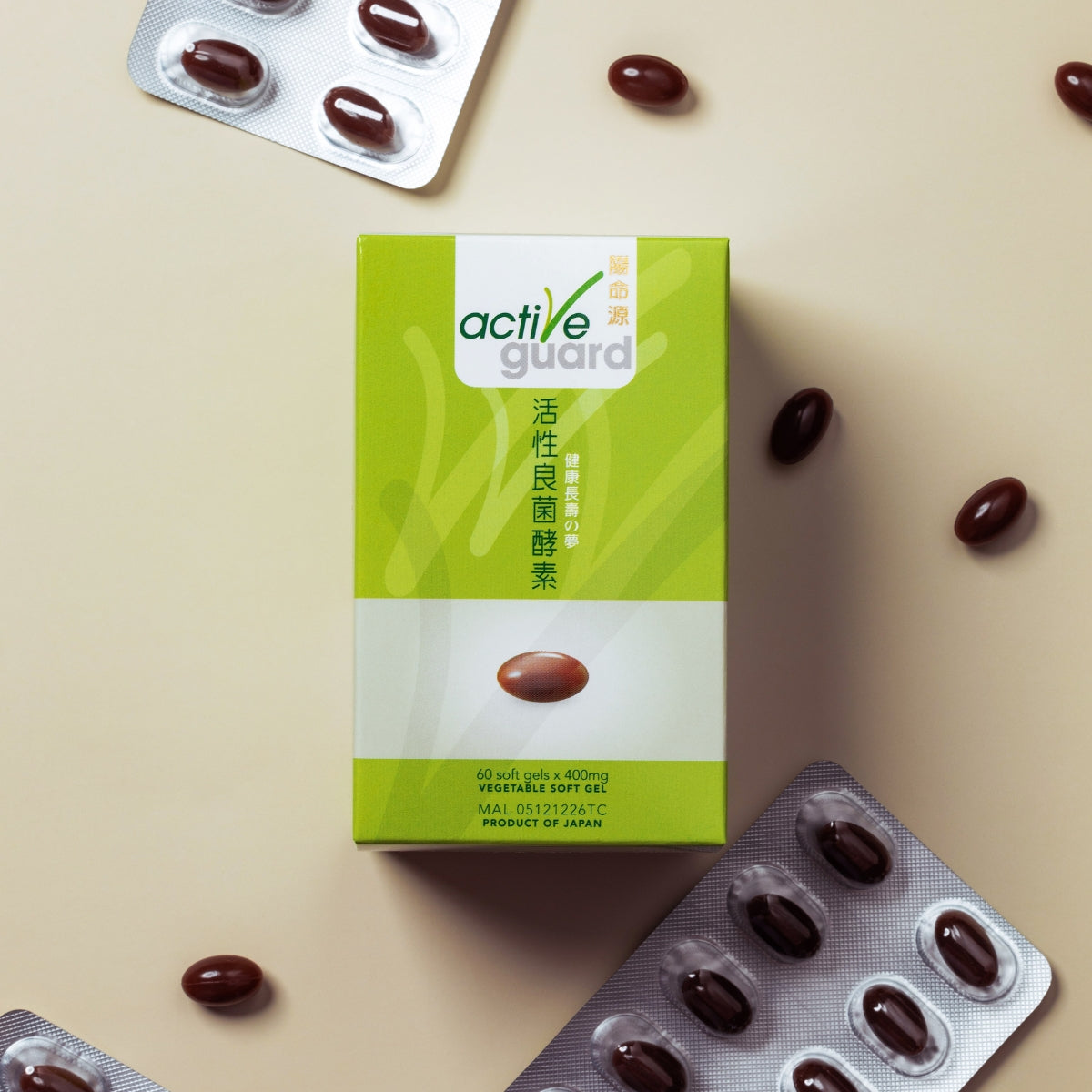
OSN Active Guard contains 17 strains of friendly bacteria. We have also compiled them below in a table to help you understand how we categorised them during research.
| Strain | Commonly Studied For |
|---|---|
| Lactobacillus acidophilus | Digestive comfort and gut bacterial balance |
| Lactobacillus casei | Bowel regularity and easing occasional digestive upset |
| Lactobacillus plantarum | Gut barrier function and immune balance |
| Lactobacillus brevis | Immune and gut microbial balance |
| Lactobacillus fermentum | Antioxidant activity and immune response |
| Lactobacillus bulgaricus | Aiding lactose digestion and gut environment balance |
| Lactobacillus amylovorus | Starch breakdown, supporting nutrient availability |
| Lactobacillus buchneri | Fermentation stability over the 3-year process |
| Lactobacillus kefiranofaciens | Produces kefiran, studied for gut lining support |
| Pediococcus acidilactici | Gut microbial balance; produces natural antimicrobial compounds |
| Pediococcus pentosaceus | Antimicrobial activity and gut health support |
| Leuconostoc mesenteroides | Fermentation process and beneficial metabolite production |
| Lactococcus lactis | Gut and immune health support |
| Lactobacillus acetolerans, L. damnosus, L. urinaeequi, Pediococcus halophilus | Contribute to fermentation and strain diversity — limited independent human-health research available |
When choosing a probiotic, look for:
- Multiple bacterial strains
- Clear strain information
- A formula designed for overall gut support, not just a high CFU number
OSN Active Guard contains 17 strains of friendly bacteria, giving it a broader formulation than many basic probiotic products
2. Acid-Resistance Technology
Probiotics need to survive stomach acid before they can reach the intestine. This is one of the most important factors to consider when choosing a probiotic supplement.
The capsule or delivery system plays a major role here. A good coating helps protect the bacteria as they pass through the stomach, increasing the chance that they reach the gut alive.
Although we always share that you should look out for carrageenan coating to ensure that the beneficial bacteria travel effectively to your intestines, it is worth noting that a high-quality probiotic is not defined by its capsule. It is defined by the quality of the finished formula. We would also like to say that our Active Guard is produced through a carefully controlled three-year natural fermentation process using 75 fruits and vegetables. This process creates a complex fermented formula containing beneficial bacteria together with fermentation-derived compounds.
3. Prebiotics and Postbiotics Included

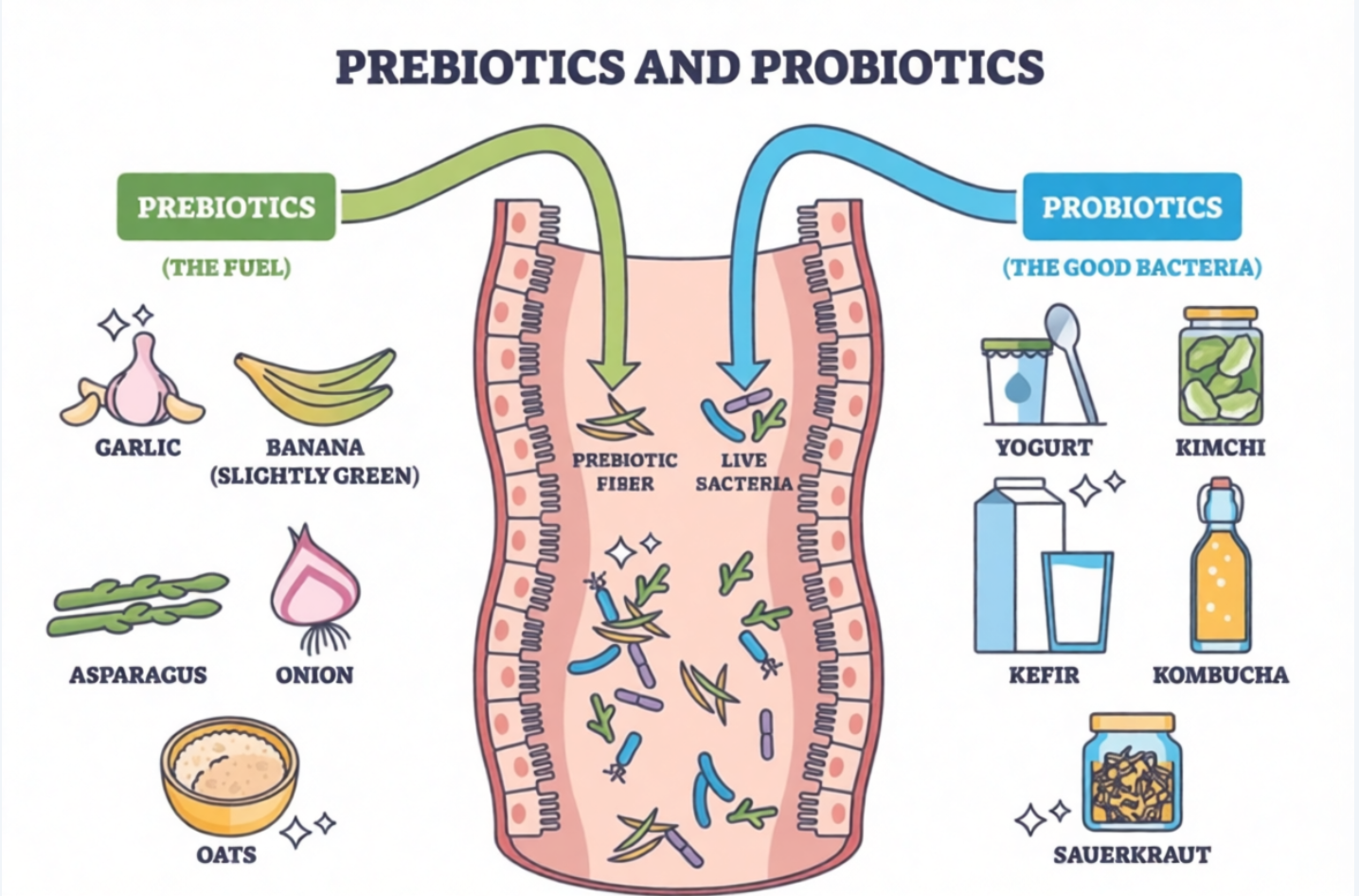
Probiotics are beneficial bacteria, but they still need support. Without prebiotics, probiotics are like seeds without soil.
Prebiotics feed and nourish beneficial bacteria, helping them survive and multiply. This gives your gut a stronger foundation than probiotics alone.
Postbiotics add another layer. These are beneficial compounds produced after fermentation, such as enzymes, amino acids, and organic acids. Unlike live bacteria, postbiotics can be absorbed directly by the body and may provide support even before probiotics colonise.
This is why a synbiotic formula can be more complete than a standard probiotic. It brings probiotics, prebiotics, and postbiotics together in one product, giving your gut more rounded support.
For shoppers comparing the best probiotics in Singapore, this distinction matters. A formula that includes prebiotics and postbiotics may offer more complete gut support than a product that only focuses on CFU count.
4. Natural vs Synthetic Manufacturing
How a probiotic is made also matters.
Some products use lab-synthesised powders that focus heavily on bacteria count. Others use natural fermentation processes that create a richer blend of nutrients and beneficial compounds that develop over time
Natural fermentation can support bioavailability because it allows ingredients to develop through a more complete process. Extended fermentation may also create a wider nutrient profile, especially when the formula includes plant-based ingredients.
OSN Active Guard is produced through a 3-year natural fermentation process using 75 fruits and vegetables. This long fermentation period supports the development of probiotics, prebiotics, and postbiotics in one formula.
This three-year timeline is not arbitrary. Across three complete cycles of seasonal change- hot summers, cold winters and everything in between–the strains inside each barrel are repeatedly exposed to shifting conditions and have to adapt to survive them. This builds their resilience. Strains that make it through these three years of natural seasonal stress are better conditioned to withstand the acidic, high-heat environment of the human gut than in controlled lab settings. By the time fermentation is complete, the formula is not just aged. It is a process designed to bring each strain to its peak strength before it reaches your body.
For anyone looking for a probiotic supplement in Singapore, this is worth considering. A product should not only contain good bacteria. It should also be made in a way that supports how the body receives and uses the formula.
5. Transparency and Third-Party Validation
A trustworthy probiotic brand should give you more than broad claims.
Look for signs of credibility, such as:
- Named ingredients
- Clear formulation details
- Manufacturing standards
- Clinical studies or research references
- Transparent explanations of how the product works
Generic phrases like “supports gut health” are common, but they do not tell you much on their own. Stronger brands explain what is inside, how it is made, and why the formulation matters.
This is especially important when comparing products at different price points. A lower-cost capsule may seem attractive, but it may not offer the same strain diversity, acid resistance, fermentation quality, or supporting ingredients.
Good probiotics should make sense on the label, not just in the marketing.
What This Means for Singaporean Shoppers
Singapore’s supplement market is crowded. Pharmacies, wellness stores, online marketplaces, and health brands all offer probiotic options at very different price points.
It can be tempting to compare products by price per capsule or CFU count alone. However, those numbers do not tell you enough.
Before buying, ask:
- What strains are included?
- Can the probiotics survive stomach acid?
- Does the formula include prebiotics?
- Are postbiotics included?
- How was the product made?
- Is there detailed research or manufacturing information behind it?
A well-formulated synbiotic supplement may require fewer capsules and still deliver better gut support than a high-CFU probiotic with poor survival. This is because the formula works as a system, not just as a bacteria count.
That is why Active Guard is positioned differently. It combines 17 strains, an acid-resistant capsule, prebiotics, postbiotics, and 3-year natural fermentation in one daily softgel.
It does not rely on CFU count alone. It focuses on what matters after you swallow it.
Fun Facts and Busted Myths
Now, here’s how you can maximise the nutritional benefits by busting some common myths below.
Busted Myths -
1. Refrigerated probiotics are always stronger than shelf-stable ones.
Not necessarily true. A probiotic needing refrigeration can actually signal the opposite — that the formulation hasn't been engineered to survive outside a fridge. Products that need refrigeration may reflect limitations in formulation technology rather than superior potency, and a probiotic that can't survive room temperature raises the question of whether it has enough live bacteria or protective technology to survive storage at all.
2. Yoghurt is basically the only 'real' source of probiotics
Yoghurt got the reputation first, but naturally fermented foods across cultures — miso, kimchi, tempeh, fermented vegetables — all carry their own bacterial cultures. It's a much bigger family than one dairy product.
Fun Facts -
1. About 90% of your body's serotonin — the "feel-good" chemical — is made in your gut, not your brain.
Although serotonin is best known as a brain neurotransmitter, an estimated 90 per cent of it is actually produced in the digestive tract.
2. Your gut microbiome can start shifting within 3 days of a major diet change.
Research shows the gut microbiome can look noticeably different just three days after a significant shift in eating habits
Conclusion
Choosing a probiotic should not come down to the biggest number on the front of the bottle.
The five things that matter most are strain diversity, acid resistance, prebiotic inclusion, natural manufacturing, and clinical or formulation transparency. These factors give you a better picture of whether a probiotic can survive, reach your gut, and support your microbiome effectively.
The next time you compare the best probiotics in Singapore, use this checklist to understand the bacterial strains that you are purchasing as well. It will help you look past the label claims and choose a product based on formulation quality.
If you want to see how a complete synbiotic was designed around these five criteria, explore OSN Active Guard.
See How Active Guard Was Formulated →
17 strains | Carrageenan acid-resistant capsule | 3-year natural fermentation | Clinically studied
Frequently Asked Questions
What is a good CFU count for a daily probiotic in Singapore?
There is no single perfect CFU count for everyone. A higher number does not always mean better results. What matters is whether the bacteria can survive digestion and reach your gut alive. Strain diversity, acid resistance, and prebiotic support are often more important than CFU count alone.
Should I refrigerate my probiotic supplement?
It depends on the product. Some probiotics need refrigeration to maintain live bacteria, while others are shelf-stable because of their formulation and capsule technology. Always follow the storage instructions on the label. If you live in Singapore’s warm climate, keep supplements away from heat, sunlight, and humidity.
Are probiotics from pharmacies such as LAC or Blackmores as effective as specialist brands?
Pharmacy probiotics can be useful, but effectiveness depends on the formulation. Instead of judging by brand recognition alone, compare the strain diversity, delivery system, inclusion of prebiotics or postbiotics, manufacturing quality, and transparency. Specialist gut health brands may offer more targeted or complete formulations.
How long before I notice results from a quality probiotic?
Some people notice changes in digestion within a few days, while others may need several weeks of consistent use. Results depend on your diet, stress levels, sleep, hydration, existing gut health, and how well the probiotic formula survives digestion. For best support, take it consistently and pair it with a balanced, fiber-rich diet.


Leave a comment
All comments are moderated before being published.
This site is protected by hCaptcha and the hCaptcha Privacy Policy and Terms of Service apply.